| Welcome to your board director briefing. This week I look at BP’s board turmoil and argue that there is one reason to cheer — the checks and balances of UK corporate governance held. Elsewhere we have stories on M&A, how AI is changing consulting and proposed governance at SpaceX. If you want to catch up on recent briefings, you can explore the FT Infosys Board Network hub, where you’ll find links to FT.com articles, research and our archive of newsletters. Do you have comments or suggestions for us? Send them to me at Andrew Hill at andrew.hill@ft.com or Kate Hodge at kate.hodge@ft.com. Thanks for reading. Governance is a silver lining at BP |
| | |

One person close to the company alleged that Albert Manifold had engaged in bullying inside BP © Chris Ratcliffe/Bloomberg It is hard to extract a silver lining from the cloud that seems to hang permanently over BP these days. This week, the board ousted its chair, Albert Manifold, after less than a year in the role, and only six months after he helped appoint Meg O’Neill as chief executive. The energy group has now replaced two chief executives and two chairs in the past three years. The company said Manifold’s departure followed “serious concerns raised to the board related to important governance standards, oversight and conduct”. Today, Manifold called the allegations “lies” and dismissed the suggestion he had behaved like a hands-on executive chair as “nonsense”. BP, still trying to right itself after swinging too far, too quickly towards renewable energy, is reeling. The Lex column has questioned whether the board did a good job when it decided the chair role was the right fit for Manifold, former chief executive of cement maker CRH. Doubtless this is not the end of the saga. But let’s raise a small cheer for the checks and balances embedded in UK corporate governance, which seem to have allowed the board to take rapid action. First, the separation of chair and chief executive means BP shareholders can still count on well-respected O’Neill to continue to lead the revamped strategy that they like. Second, BP’s senior independent director, Aviva CEO Amanda Blanc, appears to have discharged her role to “intervene in the interest of board and company stability”, as Financial Reporting Council guidance suggests. She provided an alternative sounding board for directors and handled a hasty succession, including the appointment of an interim chair. If the chair and CEO roles had been held by the same person — as is still common at many US companies — BP might now be rudderless. That is worth bearing in mind at a time when Elon Musk is pushing plans to make his position as founder, chief executive, chief technical officer and chair of soon-to-be-floated SpaceX completely impregnable.
 Private capital and AI are changing the consulting industry. Together, they are enabling smaller advisory firms to achieve scale, depriving traditional industry giants of their “main advantage” “The bigger firms are now under pressure to redraw their workforce strategies and in some cases have begun shedding thousands of jobs.” 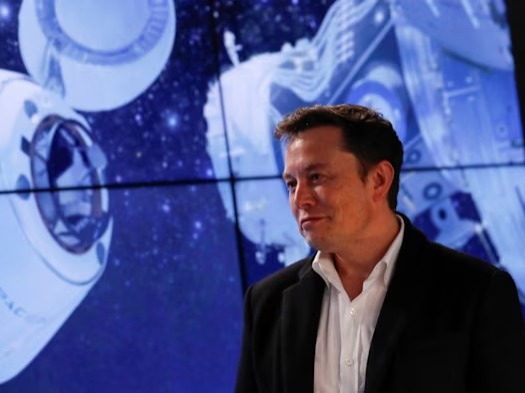 | SpaceX to drive a Cybertruck through corporate governance norms | | Governance: Provisions in the IPO prospectus will give Elon Musk more freedom — and potentially less accountability |
|  | How the AI revolution has turbocharged M&A | | Dealmaking: Deals hit record highs, unloved companies turn sexy and PE finds a new gold mine |
|  | |  | Bolloré deals blow to Bill Ackman’s €55bn offer for Universal Music | | M&A: Chief of family group controlling nearly a third of UMG shares says bid should be rejected |
|
| | |
Risk in focus 2026/2027 | Chartered Institute of Internal Auditors This interim report looks at data from a survey of 797 chief audit executives from the UK and Europe. Findings suggest there are some “potential blind spots” whereby the severity of certain risks do not necessarily match maturity of risk management on the topic. Route to the top 2026 | Heidrick & Struggles This data looks at the profile of 1,664 chief executives at the biggest companies in 28 markets. Interestingly, in the US, 45 per cent of bosses in the survey have experience as chief operating officer. Corporate responsibility and directors’ duties in the era of artificial intelligence | 2026 Harold Ford Memorial Lecture This speech by Andrew Bell, Chief Justice of New South Wales, explores how AI affects directors’ duties and responsibilities. It focuses on Australia but the insights are more widely applicable. Directors must ensure that “the crucible of debate and productive conflict of ideas in the board room is not undermined or supplanted by AI,” he said.
|