| Welcome to your board director briefing, taking you through this week’s top stories and governance research. I start with a look at the struggling world of western carmakers. They are being battered by technological, geopolitical and industrial change, but their response is also being hindered by legacy processes. Elsewhere we have stories on M&A activity, corporate reporting and family businesses, alongside a good dose of AI insights. If you want to catch up on recent briefings, you can explore the FT Infosys Board Network hub, where you’ll find links to FT.com articles, research and our archive of newsletters. Do you have comments or suggestions for us? Send them to me at Andrew Hill at andrew.hill@ft.com or Kate Hodge at kate.hodge@ft.com. Thanks for reading. Would it be easier to start from scratch? |
| | |

Stellantis has expanded its partnership with China’s Leapmotor. The deal aims to secure the future of its two Spanish plants and deepen collaboration on EVs © Fabian Simon/Europa Press via Getty Images One day someone will write a thrilling history of how the legacy manufacturers of the west’s automotive industry turned themselves inside out in the 2020s as they struggled with technological, geopolitical and industrial change. One of those chapters was being written this week at the FT’s Future of the Car Summit in London, where I interviewed some of the executives at the centre of the maelstrom created by intense Chinese competition, high oil prices and, looming in the industry’s rear-view mirror, the advent of the AI-enabled “intelligent car”. Chipmaker NXP’s head of automotive Jens Hinrichsen explained to me that the intelligent car goes beyond the “software-defined vehicle” — in which digitised components are overlaid on traditional hardware. AI is already helping to improve the entertainment and driver assistance systems of cars. But AI will eventually permeate the core functions of the intelligent car, from fuel consumption to braking and steering. Clearly this would raise issues of safety and driver trust, if AI interfered with control of the vehicle. Nobody would want to take the wheel of an erratic “funny car”, as Hinrichsen put it. But a bigger obstacle to progress may be the legacy processes of established carmakers. Fiercely proud of their engineering and design skills, they are loath to collaborate with each other on a simplified common platform. Boards of established carmakers operating in this fast-changing landscape have to grapple with these vast strategic questions. There were signs at the summit that some of the barriers are already breaking down. Executives from Stellantis (owner of brands such as Chrysler, Fiat and Peugeot) and Ford are looking to partnerships with Chinese and non-Chinese rivals as they seek to stay competitive in Europe. Still, established manufacturers look enviously at start-ups. Perhaps, they speculate, the only way to ditch the habits of a century of carmaking and create a truly intelligent car is to start from scratch.
 The world’s biggest companies have added more than $5.4tn in value since the conflict in Iran began. Tech groups helped. Investors turned back to the sector during the “extreme macro uncertainty”, said Luca Paolini, chief strategist at Pictet Asset Management. “Post-ceasefire, it was all about AI again,” he added.  | | 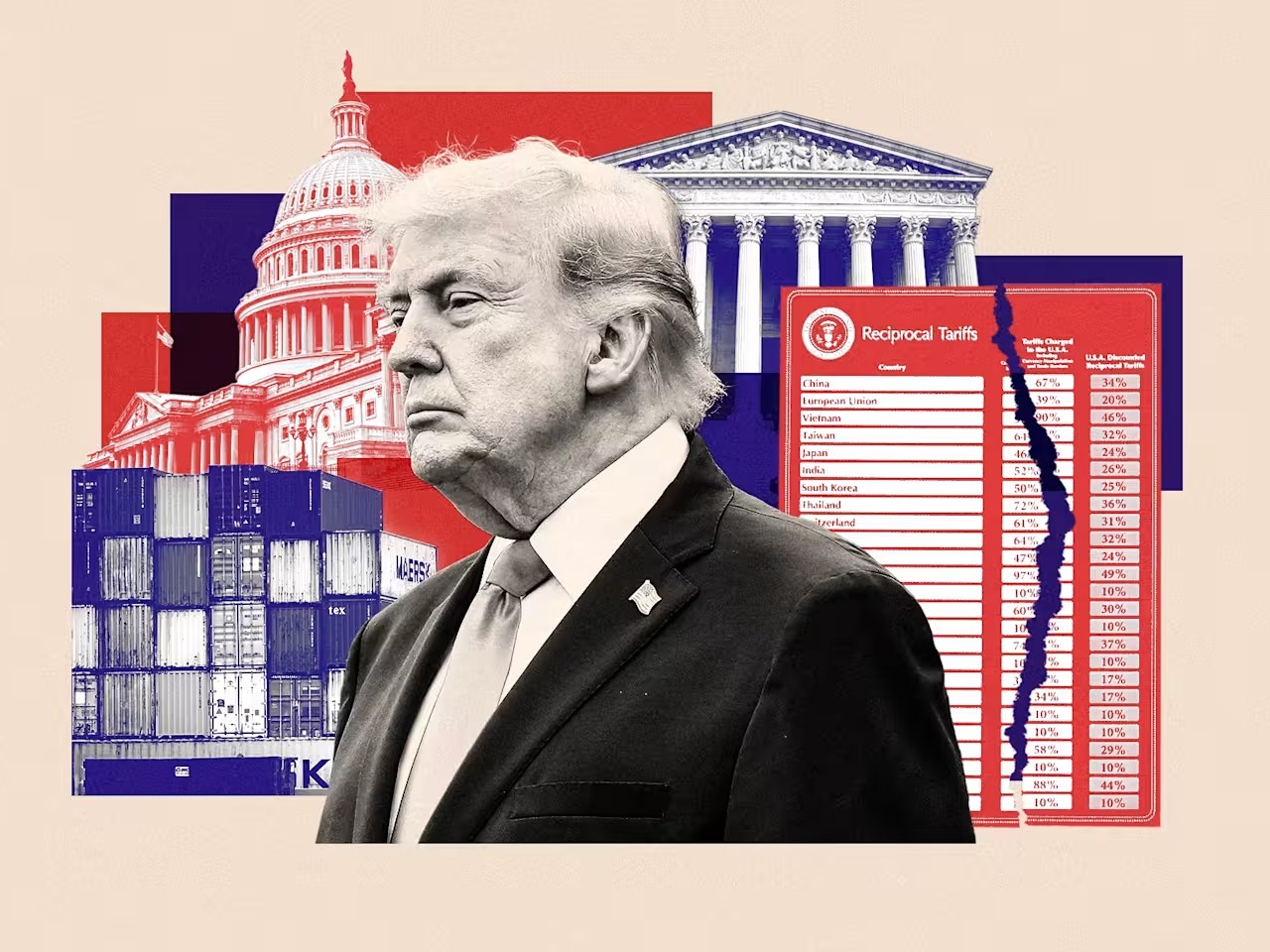 | Trump loses his trade superpower | | Geopolitics: ‘Tariff man’ wants to recover from a wounding Supreme Court ruling. But Congress is restive and voters are unhappy |
|  | GameStop makes big bet that governance doesn’t matter | | M&A: When it comes to company oversight, ‘Ebay is a textbook example of the norms GameStop boss Ryan Cohen wants to burn down’ |
|  | |
| | |
AI corporate governance and Ben & Jerry’s risk | Harvard Law School Forum on Corporate Governance Researchers look at the governance of OpenAI and Anthropic and the use of “mission guardians”. In some cases, they found that such figures can be “worse than useless”, jeopardising investors and achieving the opposite what they are supposed to. Corporate governance in Asia 2026 | Diligent Shareholder activism is on the up, according to this report, with governance accounting for about a third of demands in the first quarter of this year, and a quarter of all those made last year. Global AI in finance 2026 | KPMG The report looks at how the finance function is using AI, where it is boosting performance, and where it isn’t. “The strongest improvements are in decision-making quality, forecast accuracy and responsiveness,” it notes. “These are judgment-heavy areas, not transactional processes.” Board Network is written by Andrew Hill, and researched and edited by Kate Hodge.
|