| Welcome to your weekly curated briefing of important news and views for board directors. This week, I get to the bottom of a UK investor’s attempt to force a strategic shift at a Japanese toilet maker, and we highlight recent FT analysis of boardroom pay and Donald Trump’s impact on investment in offshore wind power. If you want to catch up on recent briefings, do explore the FT Infosys Board Network hub, where you’ll find links to the FT.com articles and research that we’ve referenced in recent weeks and to our archive of recent briefings. Do you have comments or suggestions for the newsletter? Send them to me at Andrew Hill at andrew.hill@ft.com or Jonathan Moules at jonathan.moules@ft.com. Thanks for reading. When a WC becomes an AI play |
| | |

© Philip Fong/AFP/Getty Images A company’s long-term fate sometimes hangs not on high-profile takeovers or wrenching changes in strategic direction, but on making the most of unnoticed assets hidden inside the corporate structure. That is what one investor is betting on at Toto, a manufacturer of sanitary ware. Pallister Capital’s intervention at the Fukuoka-based company yielded perhaps the most striking FT headline of the week: “Japan’s largest toilet maker is undervalued AI play, says activist investor”. Pallister is not calculating, as I first imagined, that Toto’s smart toilets can be energised by AI. The UK activist believes the Japanese company is “the most undervalued and overlooked AI memory beneficiary”, thanks to its advanced ceramics operation, which supplies electrostatic chucks for semiconductor production. The activist believes a further 55 per cent-plus increase in Toto’s share price is possible, on top of the 60 per cent rise over the past year, if it expands in advanced ceramics. Toilets-to-AI-hardware would not be the first such shift in corporate history. Nokia bet on the mobile telephony unit buried in its timber-to-rubber-boots conglomerate structure in the 1990s and grew to become the world’s largest manufacturer of cell phones. Kodak failed to anticipate the shift from analogue to digital imaging, but rival Fujifilm survived by focusing on its advanced chemicals and materials business. To some degree, such choices are out of boards’ hands. Your company either has a hidden treasure or it does not. But one duty of directors is to act as an opportunity radar. Glassmaker Corning’s board nearly failed chief executive Wendell Weeks in 2007 when they sent him back to Steve Jobs to tell him he had to find a second supplier of the toughened glass he had demanded for the first iPhone. Jobs challenged Weeks not to give in to his fears about not being able to make enough “Gorilla Glass”: “You’re worried about you looking bad, and you’re keeping your people from greatness,” the Apple boss said, according to a recent Fortune interview with Weeks. Corning’s decision to go all-in on the Apple order transformed the company into a lynchpin of the iPhone supply chain. 
Investment in new offshore wind in the US is projected to collapse as a result of President Donald Trump’s efforts to cripple the multibillion-dollar industry. BloombergNEF cut its 2035 forecast by 85 per cent after Trump’s 2024 election victory, and predicted the delay or cancellation of $114bn of investment. Suppliers say they are turning their focus to markets outside the US. 
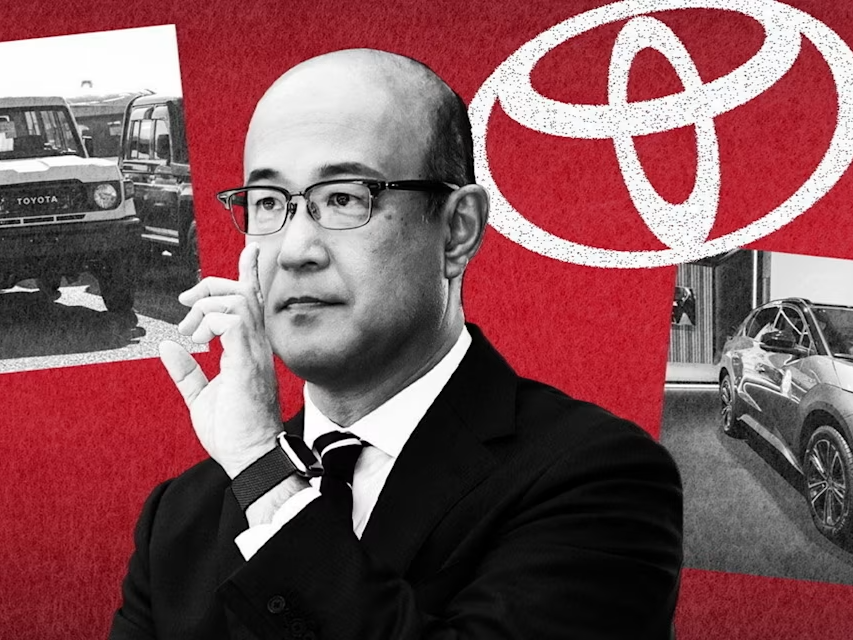 | Toyota bets on financial discipline to survive China’s EV onslaught | | Kenta Kon, Toyota’s incoming chief executive, has vowed to eliminate ‘any wasteful penny’ in the Japanese carmaker’s battle with Chinese rivals. |
|  | Who would be a FTSE 100 chair? | | London-listed companies must limit chair tenures to nine years or explain any extension to shareholders. That is creating a headache for major British companies trying to succession plan. |
|  | Boardroom pay deserves a rethink | | As demands intensify and listed companies compete for talent with private capital, pay needs to be re-evaluated, according to FT columnist Anjli Raval. |
|
| | |
Did Japan’s Corporate Governance Reform Work? | Dai-ichi Life Group This report assesses how Japanese corporate governance reforms since 2015 have affected company profitability as measured by return on equity. 2026 Checklist for Successful Acquisitions in the United States | Wachtell, Lipton, Rosen & Katz Amid rising levels of cross-border M&A activity, this is a checklist of items that should be taken into account by those assessing an acquisition or strategic investment in the US. Proxy Voting: Asset Managers Increased Their Support for Management in 2025 | Morningstar A study of the proxy-voting patterns of 50 of the largest US managers of equity and allocation funds finds that, as a group, voters have become more supportive of management over recent years.
Board Network is written by Andrew Hill and Jonathan Moules |