| Welcome to your update of must-read news and knowledge for board directors. This week, we look at the role of the state in encouraging strategic investments and single out FT analysis of OpenAI’s trillion-dollar web of deals and the tensions at India’s Tata Group. This newsletter comes to you as part of a partnership that combines FT journalism with Infosys tech-expertise. If you have comments, suggestions or news you think we should include, email me at andrew.hill@ft.com or editor Jonathan Moules at jonathan.moules@ft.com. Thanks for reading. 
JPMorgan chief executive Jamie Dimon said the US had become too dependent on ‘unreliable’ sources of critical minerals, products and manufacturing © Mike Segar/Reuters Boards used to expect governments to stay out of corporate strategy. That has changed under Donald Trump, in ways that might make Milton Friedman-worshipping free-market directors blench. This week, the staunchly free-trade government of the Netherlands stepped in to take control of Chinese-owned chipmaker Nexperia because of “a threat to the continuity and safeguarding on Dutch and European soil of crucial technological knowledge and capabilities”. Its Chinese owner Wingtech had started to play fast and loose with governance of the group. More important, the Dutch were under pressure from the US, which had blacklisted the Chinese company over security concerns. Over the summer, the Pentagon became the largest shareholder in MP Materials, a US rare earths producer, and Washington said it would take a 10 per cent stake in chipmaker Intel. Such moves are also influencing how private companies allocate their capital. JPMorgan Chase announced on Monday it would pump up to $10bn into companies critical to US national security as part of a broader 10-year initiative to facilitate and fund $1.5tn in key industrial areas. At the FT’s Metals and Mining Summit, which I hosted in London last week, there was a broad welcome for some government support. While the event was under way, China underlined what was at stake by tightening restrictions on exports of rare earths, which are critical for the production of certain weapons such as F-35 fighter jets, Tomahawk missiles, radar systems and drones. Setting a price floor for minerals could encourage private sector investment in a costly supply chain that has fallen behind China’s. But the rise of a new military-industrial complex raises critical questions. Which industries count as strategic? How directly, how deeply and for how long should governments invest? What are the risks for companies that align their strategies with government priorities that could change in future? Whatever the answers, geoeconomics is now firmly on the boardroom agenda. US banks are being handed an unprecedented easing of capital rules with a dilution of financial services regulation by Washington, which new research suggests could unlock $2.6tn in lending capacity, according to research by consultancy Alvarez & Marsal, increasing pressure on regulators elsewhere to follow suit. JPMorgan Chase, the largest US bank, is set to be one of the main beneficiaries. The easing of restrictions is forecast to release $39bn of its capital, lifting its earnings per share by 31 per cent and its return on equity by 7 per cent. 
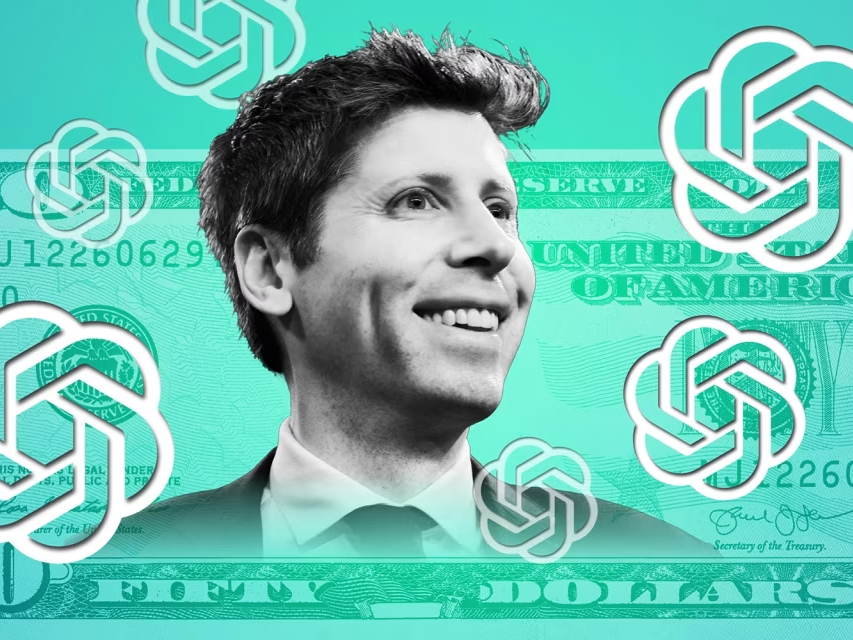 | How OpenAI put itself at the centre of a $1tn network of deals | | The company behind ChatGPT has signed agreements with many of the largest tech groups, adding to a growing web of financial dependencies across the AI world. |
|  | Glass Lewis to end benchmark voting recommendations on proxy issues | | The advisory firm will instead begin offering multiple perspectives after criticism over diversity and environmental criteria. |
|  | The meltdown at Nestlé | | Behind the Money podcast presenter Michela Tindera talks to the FT’s Madeleine Speed about the problems at the Swiss confectionery group. |
|  | Tata Group ‘fighting multiple fires’ after cyber attacks and boardroom splits | | The powerful Indian conglomerate has suffered an aviation disaster, cyber attacks in the UK and slowing growth in a tumultuous six months. |
|
| | |
Reclaiming advantage | PwC This global survey of 1,325 owners and senior leaders in more than 60 territories, carried out in collaboration with the John L Ward Center for Family Enterprises at Northwestern University on behalf of its Kellogg School of Management, highlights a divergence in top line performance among family-owned businesses. Future Risks Report | Axa Researchers surveyed 3,600 experts from 57 countries and a representative sample of 23,000 individuals from 18 countries to rank their top 10 risks, based on their potential impact on society over the next five to ten years. The findings highlight an accelerating sense of global fragmentation, declining trust in institutions, and rising concern over technology-driven and geopolitical risks. The Growing Threat and Reality of “DEXIT” | Glass Lewis There were more reincorporation proposals in this proxy season than in prior years, with a larger number of companies moving away from Delaware, according to this study. But in terms of a widespread exit from Delaware, branded Dexit by commentators, it appears that the fear was greater than reality.
|