| Welcome to your weekly governance briefing, where I share a cautionary tale for directors from Donald Trump’s call to Fifa president Gianni Infantino. Elsewhere we have top stories on succession at Ocado and SoftBank’s strategy, alongside research on the science of decision-making. If you want to catch up on recent briefings, you can explore the FT Infosys Board Network hub, where you’ll find links to FT.com articles, research and our archive of newsletters. Do you have comments or suggestions for us? Send them to me at Andrew Hill at andrew.hill@ft.com or Kate Hodge at kate.hodge@ft.com. Thanks for reading. Rules — and the reputational risk of bending them |
| | |

Donald Trump is joined by Fifa president Gianni Infantino at the White House. Like the US president, Infantino is a one-man show © Ricky Carioti/The Washington Post/Getty Images Donald Trump didn’t know what a red card meant until the US striker Folarin Balogun received one for a foul in the football World Cup and was automatically ruled out of the team’s round-of-16 game against Belgium. Still, the US president knew the decision and punishment were wrong, placed a call to Fifa, the game’s governing body, and, hey presto, the sanction was suspended for a year. So far, so Trump. The rules, principles and precedents that govern global organisations, be that Nato, the Nobel Prize committee or Fifa, are simply supposed to bend to his and his nation’s self-interest. But, in football as in corporate governance, the rules themselves, the regulators that enforce them and the boards and committees that oversee them, are supposed to be proof against bad behaviour and insulation against undue outside influence. Instead, Fifa president Gianni Infantino has hidden behind the committees and processes he is paid to oversee, shielding himself from the scandal by claiming that Fifa’s judicial bodies’ “independence is essential to the credibility and integrity of football, and this must always be respected”. The world has learnt to expect little from Infantino, who created a “peace prize” specially to curry favour with Trump. But it is a measure of the damage done to Fifa by this rarest of deviations from established due process that Infantino’s disgraced predecessor Sepp Blatter attacked it. Nobody comes out well. Trump’s casual tampering with a successful tournament has exposed his true nature to a wide global audience. Infantino has dug another hole that further undermines Fifa’s reputation. Even the popular US team suffered: Balogun played but the US went down 4-1 to a Belgian team exasperated and energised by the controversy. “Overturn this”, they posted on social media afterwards. The world is full of bad actors. It is exactly why governance structures, regulators, independent board directors and indeed referees exist. Infantino needed to stand up for the integrity of the rules and rulemakers against bullying pressure from above. That he did not, and is now reaping the reputational consequences, provides a cautionary tale for anyone in a responsible position of oversight.
 Darren Woods, chair and chief executive of the world’s largest non-state-owned oil company, ExxonMobil, struck a triumphant tone at the company’s annual meeting in May. Woods faced a tough first five years as chief. But it looks as though his “growth strategy focused on pumping more oil” is paying off. This “marks a stunning turnaround for the energy group”, write Jamie Smyth and Kenza Bryan, though they warn of “the risk of over-reach”.  | |  | |  | | 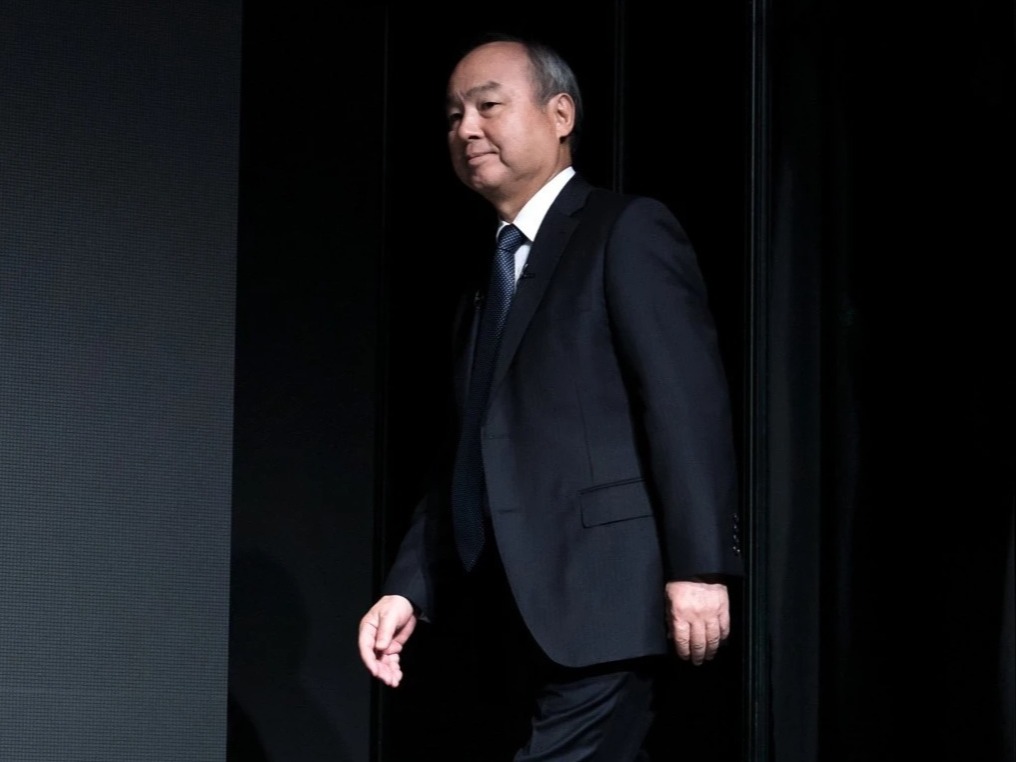 | Son remakes SoftBank in his own image | | Strategy: The veteran investor has put himself at the centre of the global AI boom. Some think he now has too much control |
|
| | |
Making sponsorship work: Strengthening executive progression | FTSE Women Leaders This research examined partner promotions at a Big Four firm to consider how progression works in practice. It found two “scripts” influence promotions — the “formal script” (objective criteria, performance and process) and the “political script” (such as reputation, influence and visibility). Sponsorship is key for navigating these, and the report makes recommendations to ensure it is effective. Don’t run the numbers until you know why | Insead This blog shares three essentials for making decisions — bandwidth, options and purpose — the latter being essential. “Conducting decision analysis when purpose is misaligned or unclear is counter-productive; it lends a veneer of scientific rigour to a choice that may be heading in the wrong direction,” they write. They run through various scenarios, and argue AI can help with everything except purpose. Corporate governance in a context of disruption: 2026 survey on boards of directors | IESE This research is based on a survey of chief executives and directors of 130 companies. More than half (55 per cent) of directors said AI is “not yet delivering value”. Furthermore, 36 per cent of respondents said the board discusses the potential of AI once a year; just 15 per cent discuss it every meeting.
|