|
Welcome to your weekly digest of news and knowledge for board directors. This week, I’ve been assessing the potential winners and losers, but mainly the losers, from the bidding war for Warner Bros Discovery. We also look at why China’s open source AI gives the country an advantage over its rivals and ask whether the recent sell-off might lead to a “bitcoin winter”. If you want to catch up with past briefings, please explore the FT Infosys Board Network hub, where you’ll find links to the FT.com articles and research that we’ve referenced in recent weeks and — in the Briefings tab — to the newsletter library. If you have comments, suggestions or news you think we should include, email me at andrew.hill@ft.com or newsletter editor Jonathan Moules at jonathan.moules@ft.com. Thanks for reading. Warner risks creating a ‘worst deal’ sequel |
| | |

Paramount chief executive David Ellison’s approach for Warner Bros was rebuffed over concerns about financial backing from China and Middle East sovereign funds © FT montage/AFP/Getty Images Few who were present for the marriage of AOL and Time Warner in 2000, as I was, can forget that ill-fated union of new and old media, later dubbed by Time Warner’s then chief executive “the worst deal of the century”. Twenty-five years later, Warner is again the focus of attention, facing rival bids from Netflix and from Paramount. At time of writing, the Warner Bros Discovery board favours Netflix, but Paramount could easily raise its offer. There are legitimate competition questions about both bids. Inevitably, Donald Trump has said he wants to be “involved” in any antitrust decision, despite the fact that his son-in-law Jared Kushner is one of the backers of the Paramount offer and Paramount owner David Ellison and his father multi-billionaire Larry Ellison, are friends. The US president should recuse himself, but won’t. Paramount argues that its bid will preserve the big-screen experience that Netflix has royally disrupted with its stream-it-first-at-home model. Netflix does not own film studios or TV production, but its commitment to movie-theatre release of films is skin-deep. WBD directors have an unenviable decision to make. Such is the patchy track record of media dealmakers, nobody would bet against this tie-up also failing. There is plenty of time left for it to usurp AOL Time Warner as the worst deal of the century. The Lex column argued this week that “Netflix may not win this battle [but] that doesn’t mean it loses”. But the real victims are likely to be the “creatives” — the producers, writers, directors, and crew on whom Hollywood has historically depended. Every recent studio consolidation has eliminated moviemaking jobs. Even if Netflix’s low-overlap offer were eventually to triumph, its technological prowess suggests that in the battle against YouTube and other challengers, it would deploy artificial intelligence in the interests of speed and efficiency. That could edit many human roles out of the picture for good. The cryptocurrency industry was hugely optimistic when Donald Trump returned to the White House this year. But bitcoin has lost a quarter of its value in two months. Moreover the speed and scale of the recent sell-off has sparked warnings of a “bitcoin winter”. 
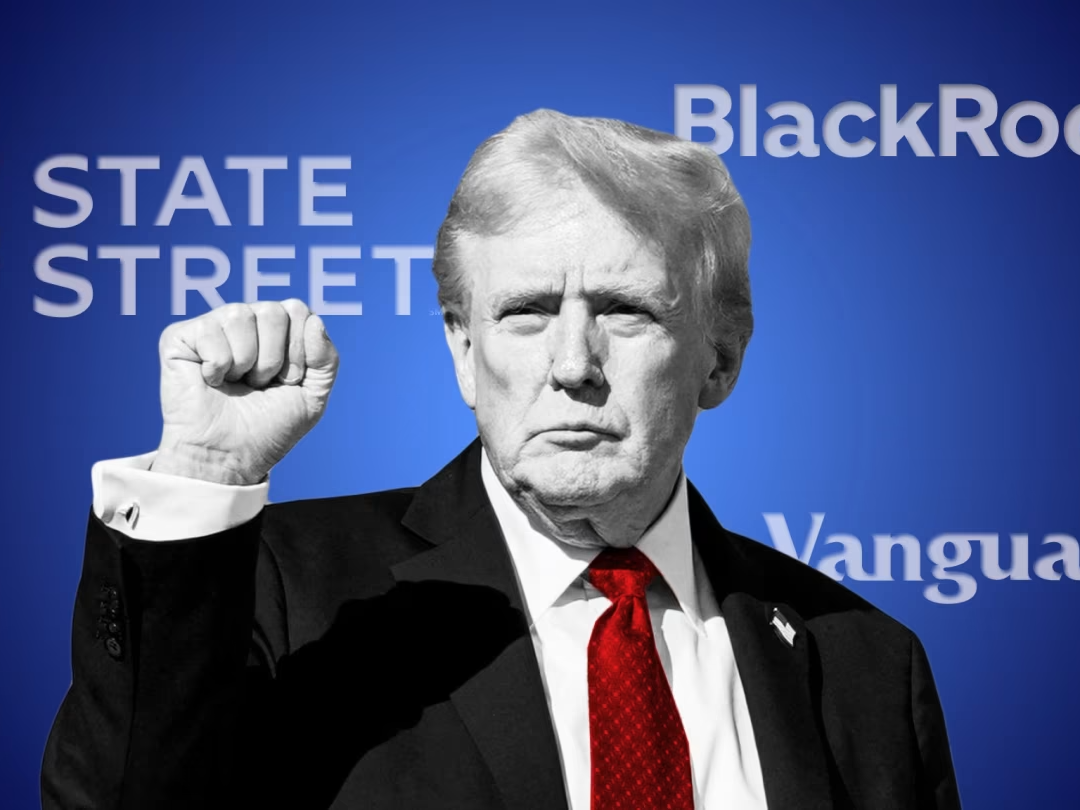 | Donald Trump drives historic shift of power from investors to boardrooms | | Moves to curb proxy advisers and passive investment giants chip away at the foundations of shareholder capitalism. |
|  | Activist behind Engine No. 1 ExxonMobil campaign builds stake in Siemens Energy | | Ananym Capital pushes for the German group to spin off its wind business two years after the company underwent a government rescue. |
|  | China’s open-source AI is a national advantage | | The artificial intelligence models being created in China are akin to studying together to ace a test instead of relying on individual knowledge. |
|  | ‘A masterful coup’: law firm behind Musk pay lawsuit faces internal revolt | | A new company formed by a star partner at Bernstein Litowitz has poached nearly all of his old law firm’s corporate governance practice. |
|
| | |
India Disclosure Index 2025 | FTI Consulting This benchmark of voluntary, non-financial disclosures, now in its sixth year, can help companies assess transparency, governance maturity, and preparedness for emerging risks. Beyond the Brussels Effect: The Surprising Rise of the International Sustainability Standards Board | ECGI This paper argues that the ISSB’s success in making itself the leading platform for climate disclosure stems not from regulatory power, but from its institutional design and grounding in private-sector practice. The Recent Evolution of Shareholder Activism in the US | The Conference Board This report draws on data from SEC filings, investor websites, news releases and media to highlight the growing use of board challenges, CEO targeting, and public campaigns to drive change. (Requires registration)
|