| Welcome to your weekly briefing for board directors, with top stories from the FT and elsewhere. IBM is top of my agenda this week, as I urge chief executive Arvind Krishna to reinvent Big Blue. Other insights include how pushing staff to use AI has backfired, strategy at Citi and CEO succession. If you want to catch up on recent briefings, you can explore the FT Infosys Board Network hub, where you’ll find links to FT.com articles, research and our archive of newsletters. Do you have comments or suggestions for us? Send them to me at Andrew Hill at andrew.hill@ft.com or Kate Hodge at kate.hodge@ft.com. Thanks for reading. Warning: there can be hubris in longevity |
| | |

The 25% drop in IBM’s stock price on a relatively modest earnings warning attests to investors’ nervousness © Bloomberg It takes quite a lot to drive a blue-chip company’s shares down by a quarter in a single day, so investors understandably took fright on Tuesday when IBM prompted a 25 per cent drop with an earnings warning. Big Blue, as the technology and consulting group is known, suggested customers had redirected IT spending from IBM’s mainframe computers and software to AI-related servers and storage equipment. As my colleague and veteran tech-watcher Richard Waters noted this “points to a fear that the pattern of IT demand is shifting”. I dare say IBM’s consulting business is also suffering from investor scepticism about the impact AI may have on the market for expensive human advice, which has already knocked a chunk out of the share price of Accenture. IBM has come through tech booms and busts before, and — in consulting at least — the evidence is that at times of disruption, board members and executives seem to want more hand-holding, not less. That’s a trait that every consulting firm is currently playing to with their breathless emphasis on the “accelerating pace of change”. One protection that IBM should not rely on, however, is its own longevity. I have seen enough century-old companies take a humiliating tumble, from Kodak to Lehman Brothers, to recognise that the years add not only experience and perspective, but also bureaucracy, cultural inertia and hubris. If IBM’s CEO Arvind Krishna has any sense he will be taking a leaf out of illustrious predecessor Lou Gerstner’s book Who Says Elephants Can’t Dance? and looking for a way to reinvent IBM once again.
 At some point, the theory goes, quantum computers will be powerful enough to crack modern encryption codes “with ease”. “This leaves a world of data at risk — not just bank accounts, health records and state secrets, but layer upon layer of operating systems and automated processes deep inside companies’ innermost structures,” Lex notes. Indeed some businesses and governments are getting ready for “Q Day”. 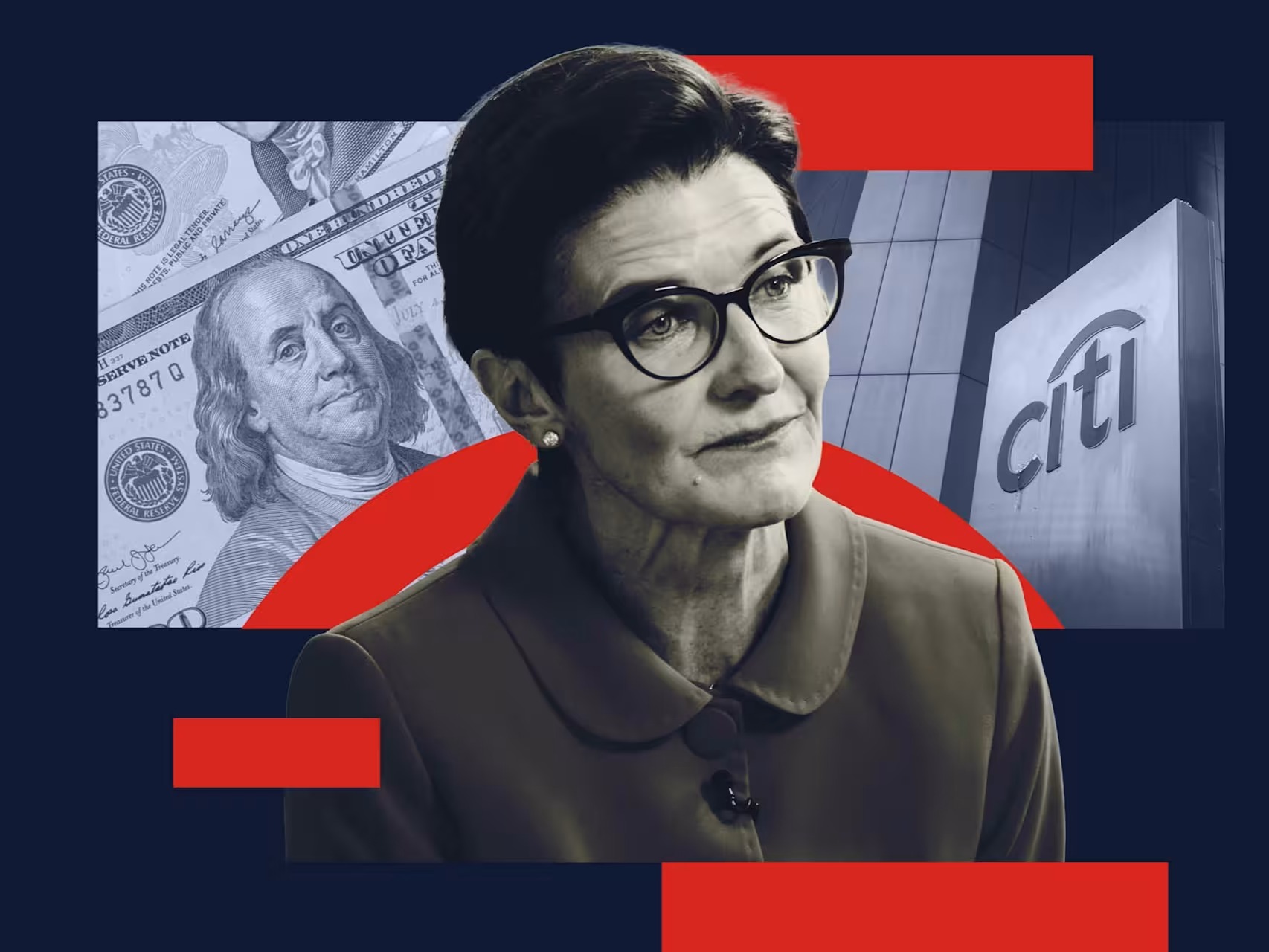 | Jane Fraser’s ruthless remake of Citigroup | | Strategy: The bank has sold assets, cut jobs and made controversial new hires while cultivating a closer relationship with Trump. Is it enough to get back into the big time? |
|  | Employers pushed staff to use AI more. That has backfired | | Technology: Incentives to use new tools are changing as costs start to hit home |
|  | Why boards can no longer wait to pick their next CEO | | Succession: Shorter tenures and more churn mean boards are running constant and proactive processes |
|  | The UK’s telecoms industry is now a billionaire’s playground | | Acquisitions: Xavier Niel and Sunil Mittal are poised to shake up Vodafone and BT after placing big bets on the UK’s major operators |
|
| | |
Global AI pulse Q2 2026 | KPMG This research is based on a survey of 2,145 senior leaders. Costs are one central trend. Nearly half (49 per cent) of organisations said they “have delayed or scaled back AI agent deployments when costs started outweighing benefits”. Meanwhile, access to cheaper AI models “was the fastest-rising strategic influence”. Second chances in the boardroom: Reputation, pardons and the limits of perpetual punishment | ECGI This article asks: when can a person who is convicted of misconduct, but later pardoned or acquitted, return to board roles? The authors argue there are five factors that can make it a “defensible board decision” including how long ago the situation played out, “subsequent conduct” and governance safeguards. Europe proxy season 2026: CEO pay rises, support holds | ISS-Corporate Last year was a good moment to head up a German listed company: the Dax 40 was “the highest-paying market” for chief executives in the last financial year, according to this research. Less so for Swiss bosses: pay in the SMI 20 was down last year, “with both bonus payments and long-term incentive vesting coming in lower as performance outcomes moderated”.
|