| Welcome to your weekly board briefing, it’s good to be back. Firstly, a warm welcome to members of the FT NED Club — we are delighted to have you join us and hope you find the newsletter helpful. There are metrics aplenty this week. We start with a look at the FT’s new tool that aims to find Britain’s best CEO — a reminder that performance and rewards can be manipulated by changing metrics, I argue. Elsewhere, we have warnings on the deadly potential of AI, strategy at BP and Shell, and proxy advisers. As always, if you want to catch up on recent briefings, you can explore the FT Infosys Board Network hub, where you’ll find links to the FT.com articles, research that we’ve referenced and our archive of briefings. Do you have comments or suggestions for the newsletter? Send them to Andrew Hill at andrew.hill@ft.com or Kate Hodge at kate.hodge@ft.com Thanks for reading. This week, the FT published an interactive tool that promises to answer the question “who is Britain’s best CEO?” The default FT weighting of criteria, from shareholder return to employee rating, placed Rolls-Royce’s Tufan Erginbilgiç at the top of the heap of 84 FTSE 100 leaders. But you can adjust the placing by recalibrating the metrics. (Our list excludes investment trusts and any CEOs with less than one year in the role.) Readers were predictably compelled and outraged. To their credit, plenty shared my objection that, with a few exceptions (Erginbilgiç might actually be one of them), leadership is a team sport. Attributing success to an individual ignores the contribution of managers around the chief executive, or the board, working together. A second criticism was the lack of gender and ethnic diversity in the group, which included only six women. Don’t shoot the messenger. The poor pipeline of female executives (as opposed to women on boards) is a longstanding challenge. Plenty of boards are trying to address it, but it takes time and, meanwhile, rankings present a snapshot of the problem, not the solution. Harvard Business Review even ditched its long-running annual ranking of the world’s “best-performing CEOs” in 2020, lest it “be seen as celebrating the [white, male] status quo”. The tool is also a reminder how executive rewards can be manipulated by changing the metrics. In the past couple of years, for instance, a number of companies have dropped or underweighted environmental, sustainability and governance targets in executive pay plans. That reflects both the US backlash against diversity and environmental policies, and concerns that it was proving too easy for executives to reap the reward of loosely drawn ESG incentives. As one cynical reader pointed out in his comment on our performance tool: “CEO productivity is going to be near zero today, as they all check [the FT tool] out and try to optimise [the] rankings to move themselves to the top”.
 Record debt and high borrowing costs are proving a potent mix for many governments. The effect is a huge debt-servicing bill — more than $2tn for OECD countries last year. “More money is now spent on servicing the national debt than on defence in the UK, France and the US,” the FT reports. Growth would be one route out, but that looks tricky in many countries. Politicians must decide “whether to raise taxes or shrink the state to get themselves out of the corner they find themselves in”.  | Top US official named to OpenAI non-profit board warns advanced AI could be ‘deadly’ | | Technology: Paul Christiano says technology could ‘kill most people’ without stronger safety features |
| 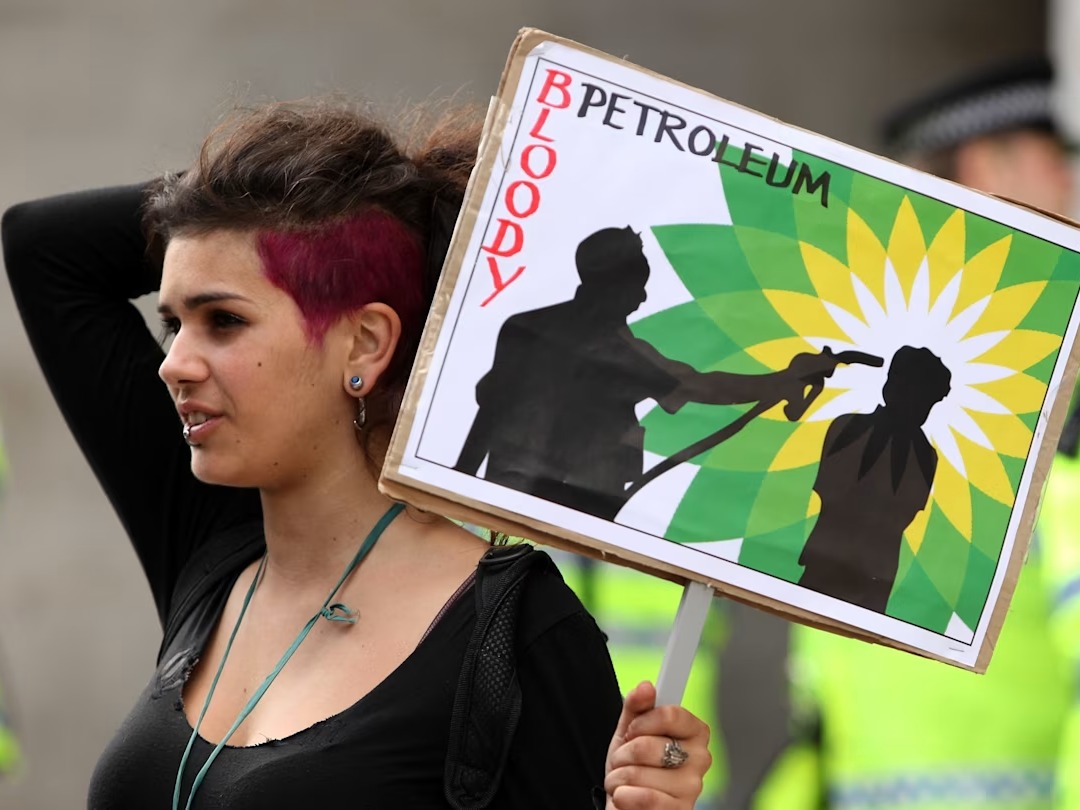 | BP and Shell’s strategy counterpoint | | Strategy: Lacking natural advantages and national support of other energy majors, the companies need to be more nimble |
|  | India’s biggest private sector bank grapples with leadership vacuum | | Leadership: Resignations of chair and chief in span of less than six months lay bare corporate governance issues at HDFC Bank |
|  | US regulator sues ISS as it steps up scrutiny of proxy advisers | | Proxy advisers: The SEC accuses the firm of ignoring a subpoena as part of its ‘fact-finding investigation’ |
|
| | |
Workforce 2026 global insights report | Korn Ferry This research is based on a survey of 16,000 professionals across a range of seniority. Productivity is one area of concern — 45 per cent of respondents said “I am too busy to deliver meaningful results”. And while most respondents said AI helped with efficiency, more than half (52 per cent) noted “AI tools have increased the number of tasks expected in my role”. Measuring board fit — evidence from Elliott’s campaign at Norwegian Cruise Line | Harvard Law School Forum on Corporate Governance Academics in this blog ask an interesting question: how do you know if you have the right directors for the job? And how do you know if their specific capabilities really fit the business’s needs? Skills matrices do not cut the mustard, they argue. They have a tool that uses AI to create deeper profiles of directors and companies, and measure the degree to which they match — or not. The real effect of harmonising climate disclosures: Why comparable disclosure cuts carbon | ECGI This research finds that companies that adopted standardised climate reporting reduced scope 1 emissions by about 6 per cent in the first year, compared with those that did not adopt the framework. Scope three emissions also dropped. Reasons include that using standardised metrics mean “underperformers can no longer hide behind selective disclosures”.
|