|
Welcome to your weekly digest of must-read news and knowledge for board directors. Happy Thanksgiving to our American readers. This week, I look at the risks of tearing down rules aimed at ensuring auditors’ independence and we highlight Trump’s war against “woke” at Davos and the outcome of the COP30 climate talks. If you want to catch up with past briefings, please explore the FT Infosys Board Network hub, where you’ll find links to the FT.com articles and research that we’ve referenced in recent weeks and — in the Briefings tab — to the newsletter library. Send any comments, suggestions or news you think we should include, email me at andrew.hill@ft.com or newsletter editor Jonathan Moules at jonathan.moules@ft.com. Thanks for reading. Finding the lesser of two evils in auditor regulation |
| | |

© FT montage Securities and Exchange Commission chief accountant Kurt Hohl, a former partner at EY, has hinted that the US regulator might loosen its conflict-of-interest rules for auditors. This would be just the latest lightening of the SEC’s regulatory touch (my colleague Brooke Masters explores another in her column, highlighted below). But Hohl’s proposal reflects the realities of a perilously concentrated audit landscape and the tangle of relationships established by big technology companies as they race for supremacy in artificial intelligence. As things stand, when the big accountants’ consulting arms offer AI and software products, conflict rules prevent them from auditing the tech companies that supply them. That leaves tech companies’ boards with a severely limited choice of available auditors. The dominance of the Big Four professional services firms should by now have been tackled at source, by encouraging more competition in audit, or even splitting off consulting. But the ambitious break-up plans of one audit giant — EY, as it happens — failed in 2023. Challenger firms have failed to develop. And here we are. On balance, the risk of audit conflict is the lesser of two evils, compared with the threat that the fast-moving world of AI will be inadequately audited. But if Hohl and the SEC press ahead, they should set some clear conditions. One is that the accounting firms should be required to report frequently and openly on clashes, by, say, listing areas of overlap between audit and consulting work. A second is that the SEC should step up its scrutiny of audit quality. Finally, the watchdog should make clear that it will act firmly to punish any evidence that auditors are tempering their scrutiny to win consulting business. Consultants at the Big Four may now be rubbing their hands at the prospect of being able to compete for juicy AI contracts. They — and their regulator — should remember that a reckless free-for-all could lead to the sort of Enron-sized scandal that would have adverse consequences for everyone. Will the fracturing of the world economy, driven by a resurgence in tariffs, benefit China or the US? Chief economics commentator Martin Wolf argues that whichever comes out on top, the rest of the world will come out worse. 
 | A COP of clumsy compromises | | It is left to a coalition of the willing to start the hard work of phasing out fossil fuels as the COP30 climate conference sputtered to an end in Brazil at the weekend. |
|  | Davos assured Trump ‘woke’ topics were off the agenda | | US officials told organisers that President Donald Trump’s attendance in January depended on programme. |
|  | Insurers retreat from AI cover as risk of multibillion-dollar claims mounts | | Major insurers are seeking to exclude artificial intelligence risks from corporate policies, as companies face multibillion-dollar claims that could emerge from the fast-developing technology. |
| 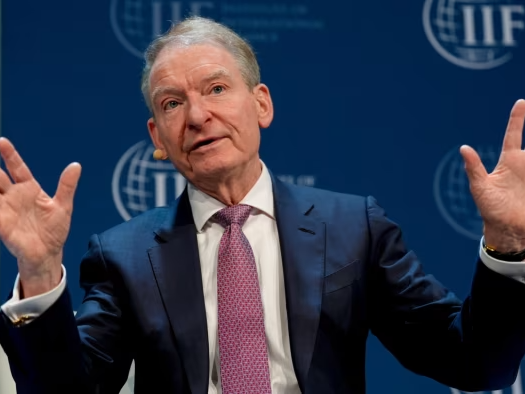 | Making IPOs great again has its pitfalls | | The US needs more public listings but the regulatory pendulum may be swinging too far, writes the FT’s US managing editor Brooke Masters |
|
| | |
2025 Proxy Season Results in Silicon Valley and Large Companies Nationwide | Fenwick This analysis of AGM shareholder votes this year in the tech and life sciences sector finds fewer were focused on environmental, social, and governance issues while those challenging ESG priorities surged. The Emerging Agentic Enterprise: How Leaders Must Navigate a New Age of AI | MIT Sloan Management Review and Boston Consulting Group This research project explains how organisations that are adopting agentic AI are gaining advantage, but also face several distinct tensions. Board Practices and Composition in the Russell 3000 and S&P 500: 2025 Edition | The Conference Board This report examines how board composition and governance practices evolved in 2025 across US public companies in the Russell 3000 and S&P 500, drawing on longitudinal data from corporate filings and disclosures.
Board Network is written by Andrew Hill and Jonathan Moules
|